
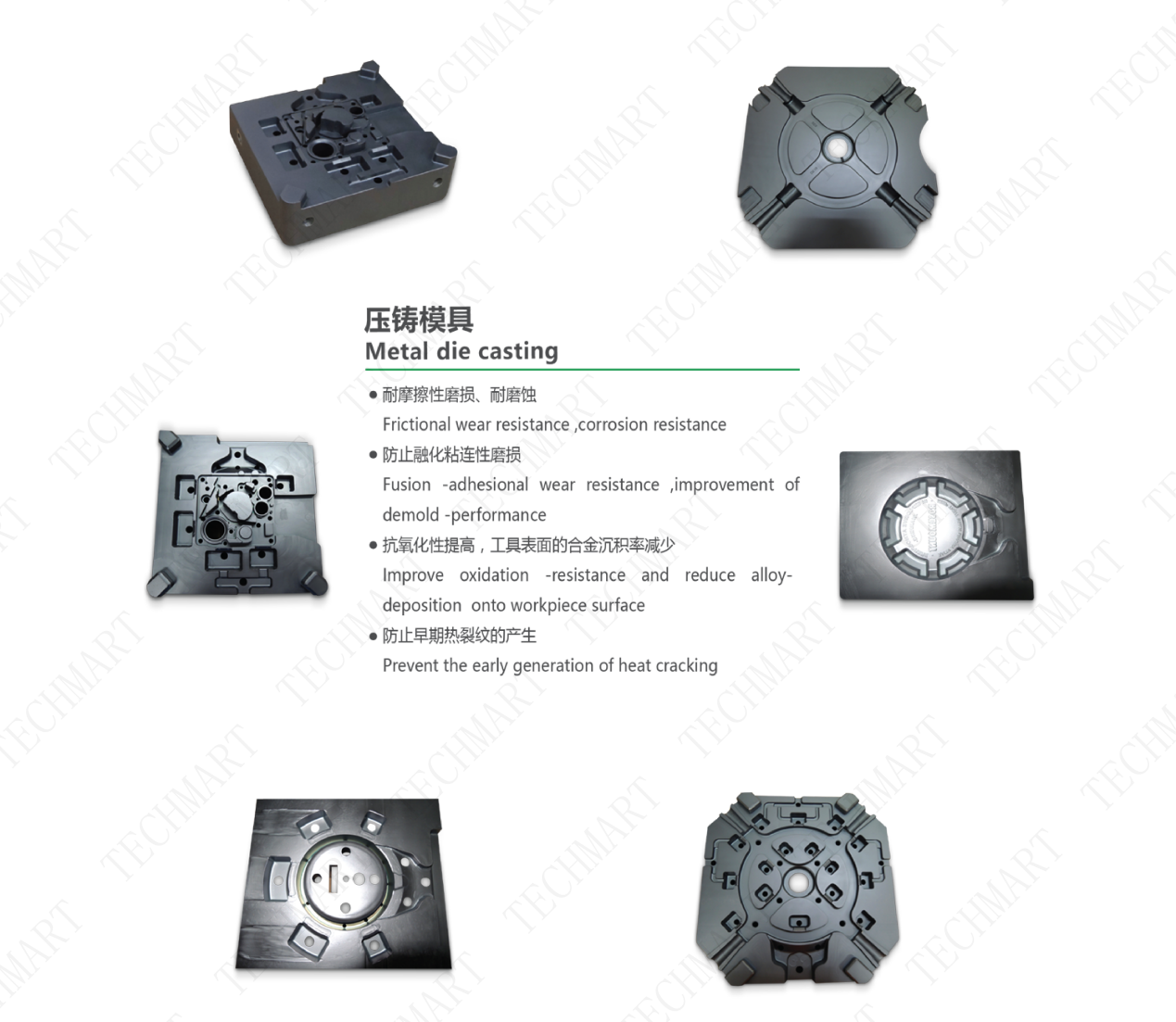
Die casting is a fast and economical production method for producing non-ferrous metal parts such as aluminum, zinc, and magnesium alloys. However, due to the need to raise the alloy temperature to the relevant melting point during the die casting process, coupled with high-pressure injection into the die casting mold in a short period of time, this production environment and conditions are a huge challenge for the mold; During production, die-casting molds often encounter various problems such as erosion, corrosion, dissolution, corrosion, thermal cracking, and even overall cracking, which can affect production and even require downtime for maintenance. So, mold makers and producers hope to solve related problems through different methods.
Die cast alloys have a certain critical erosion temperature, beyond which erosion will intensify. The die-casting temperature of zinc alloy is generally around 420 ℃, while that of aluminum alloy is about 700 ℃. As the die-casting temperature increases, the occurrence of erosion also increases.
When a coating is added to the surface of the mold, it can effectively isolate and contact the mold and alloy melt, avoiding the diffusion of alloy solution to the surface of the mold steel and causing corrosion (such as pitting corrosion commonly seen in zinc alloys and mold sticking in aluminum alloys).