
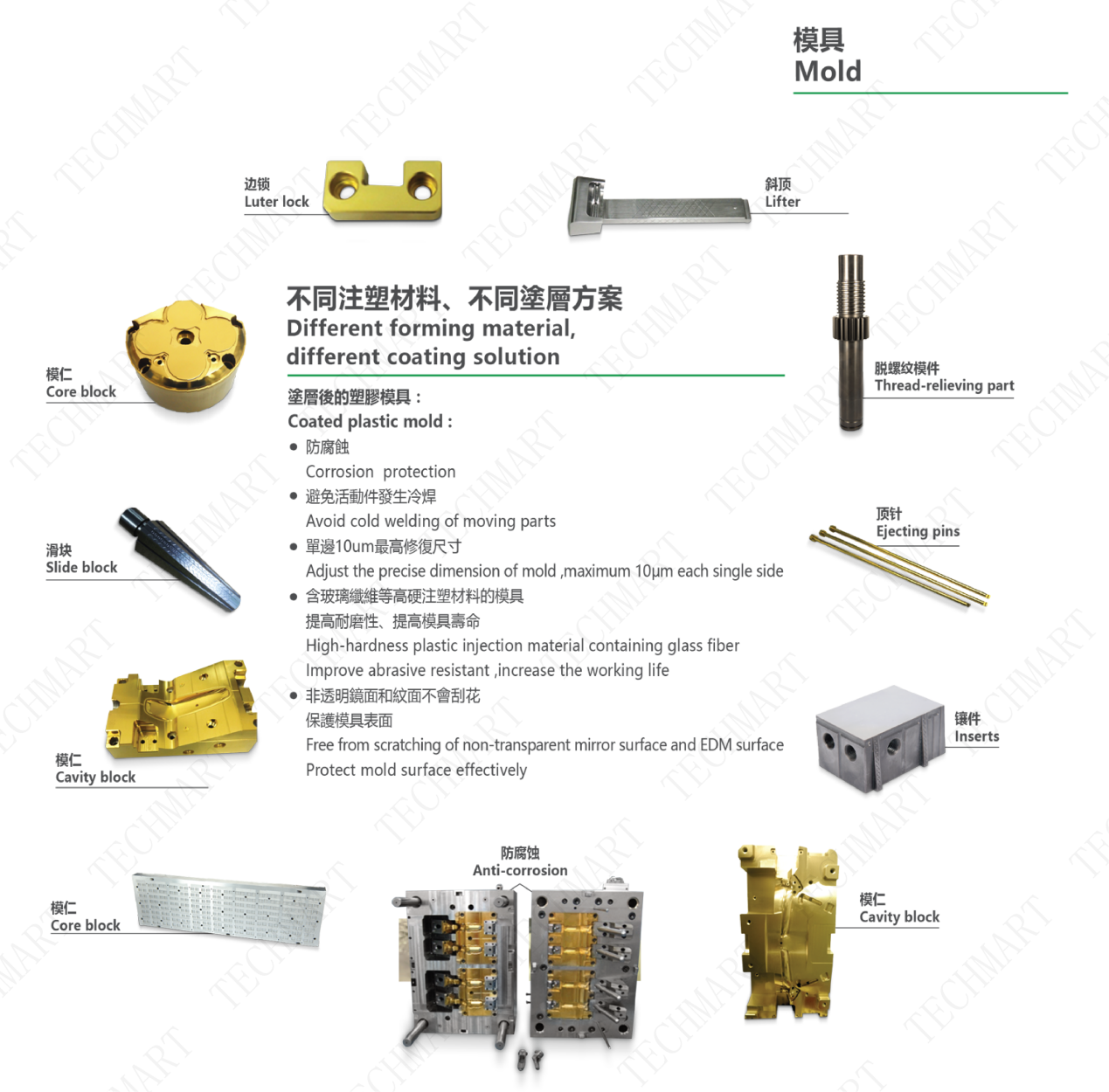
During the injection molding process, injection molds may encounter different problems such as wear, sticking, corrosion, scratches, and abrasions due to different working conditions, injection materials, and other factors, which can affect production and even require downtime for maintenance. So, mold makers and producers hope to solve related problems through different methods.
-
Wear and tear
The wear of the mold during the injection molding process, such as rounded corners and running edges on the parting surface, especially with the addition of additives such as fiberglass, causes significant wear on the mold
-
Sticking
Due to the characteristics of certain rubber materials (such as latex, TPU, PE), injection molding conditions, or mold design, the rubber material adheres to the mold after curing, making it difficult to demold the product
-
Corrosion
During the injection molding process, the rubber material releases acidic gases, which solidify on the surface of the mold and cause corrosion
-
Scratch
During the repeated sliding process of the module (especially when the module being ground is of the same material), there may be scratches or biting
-
Scratch
Non transparent mirror and textured molds are prone to scratches, so a coating is needed to protect the surface of the mold