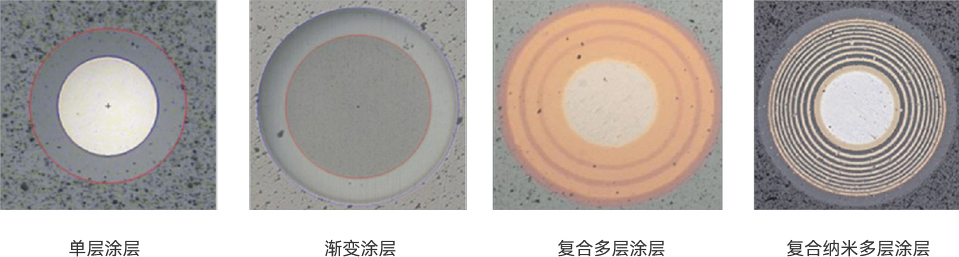
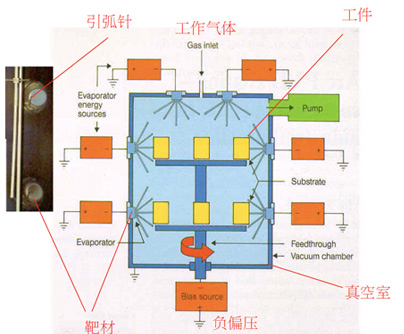
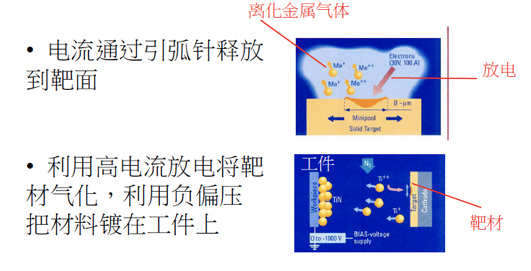
PVD (Physical Vapor Deposition) refers to the use of low voltage, high current arc discharge technology under vacuum conditions to evaporate metal targets and ionize the evaporated substances and gases, forming a layer of 1-10 μ m superhard film on the surface of the product. It is a cutting-edge technology in the field of surface treatment. This superhard PVD coating film has almost no environmental pollution problems due to its formation in a vacuum sealed chamber, making it a green and environmentally friendly technology; Ceramic coatings and composite coatings with high hardness and wear resistance that are difficult to obtain by other methods can be easily obtained. When applied to tools, molds, and parts, they can double the lifespan and achieve low-cost, high-yield results; In addition, PVD coating technology has the characteristic of relatively low temperature and can form films on most substrates.
PVD (Physical Vapor Deposition) coating technology is mainly divided into three categories: vacuum evaporation coating, vacuum sputtering coating, and vacuum ion coating.
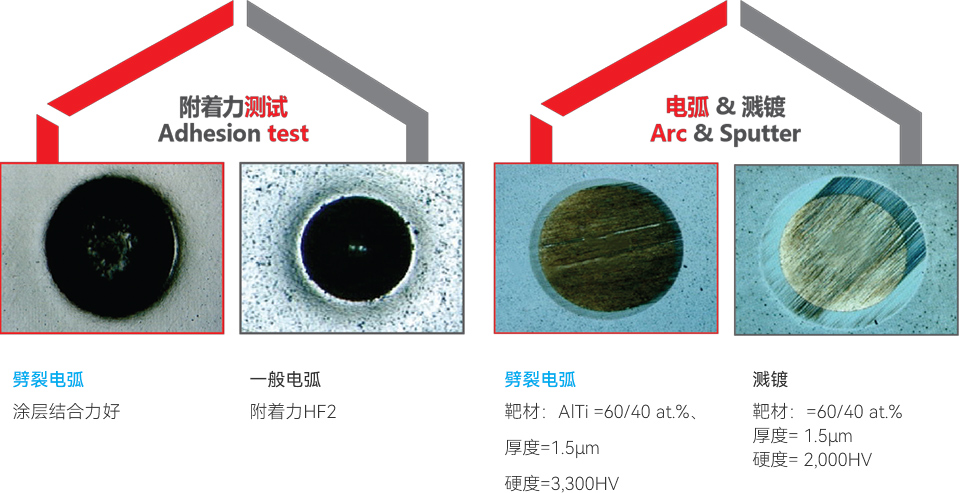
The splitting arc used by Kehui uses a higher current than traditional arcs to improve the evaporation rate of the target material; By using a magnetic field to control the current, the current is moved across the entire surface of the target material, reducing the average current (A/mm ²) and thus reducing droplets, improving coating quality.
New Swiss Prof Solution: Split Arc
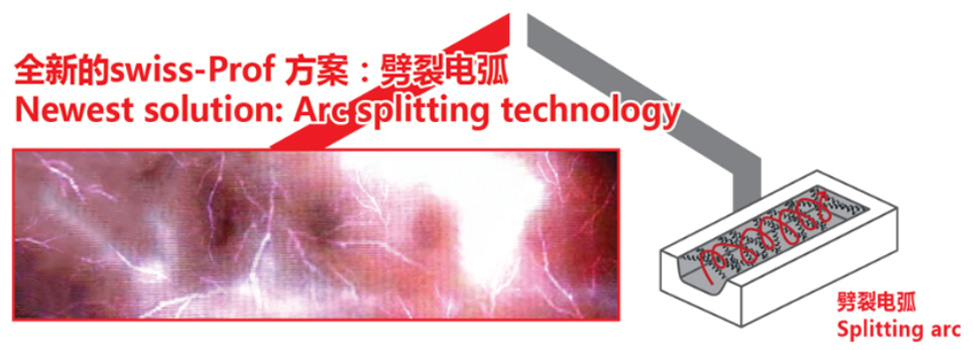
Splitting arc:400A or 800A Splitting arc technology (target utilization rate: around 60% or 75%)

Traditional arc: 200A, strong magnetic arc control (target utilization rate: about 30%)
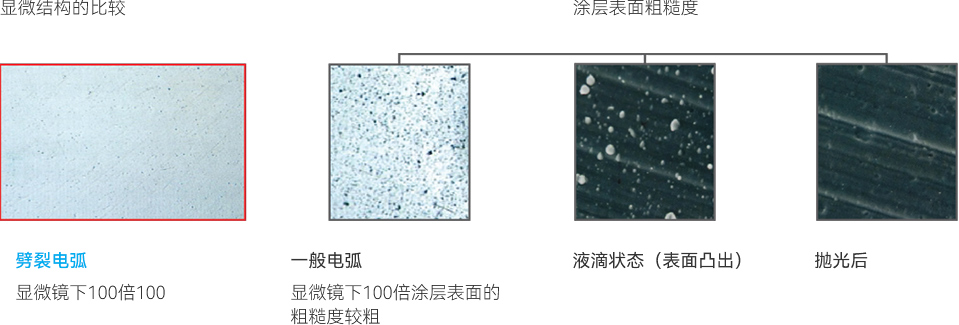
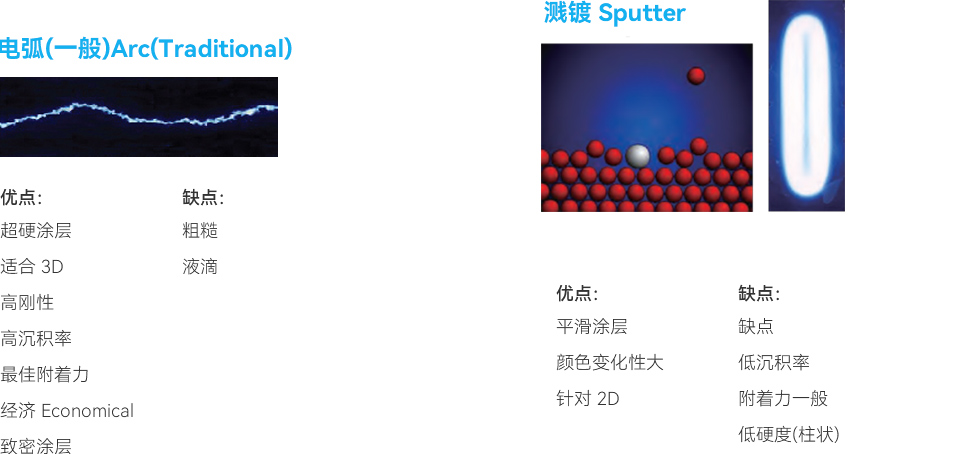
Coating structure